The colours over my head pulsed in the darkness of early morning. The Northern lights, auroa borealis, seemed to be meeting over my head with electromagnetic majesty. standing in the cold, with my eyes getting used to the light while the sleep cleared from my head, the lights above moved to their own rhythm. Propelled by the pulsations of the sun days before, the particles this morning were charged.

My journey to North51 usually takes me through the Canadian Rockies. I am privileged to drive south on one of the most beautiful highways in North America to get to Canmore, Alberta. While the winter driving can be a little touchy at times, this year was clear. Clear and absolutely beautiful. And this week’s drive started with a light show.
North51 is not a normal event; it is unique and notoriously small. We call it intimate, but that intimacy means everyone speaks to everyone, and everyone has something meaningful to say. Don’t come to make sales. Instead, come to share ideas; come to build the future.
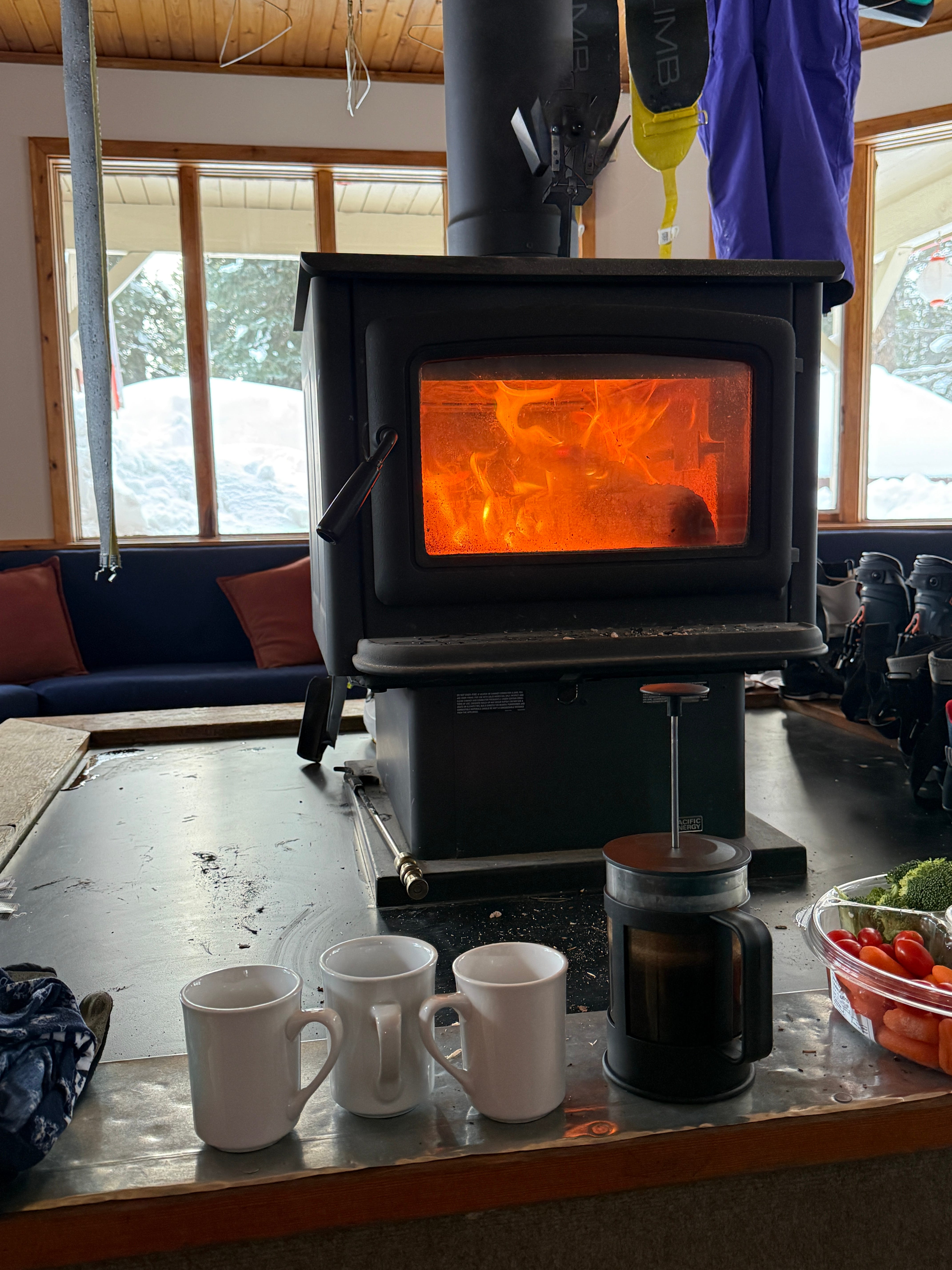
I was lucky enough to stop for a skate ski on my way through the Rockies, taking the opportunity to stretch my legs after a long drive and assemble my thoughts for an intense few days. There is something in the work of climbing a hill, followed by the cold blast of descending, that provides a unique mental clarity. The event this year was split over Wednesday afternoon and through Thursday. Friday was left to catch up on the final missed conversations and goodbyes over breakfast, or to embark on more adventures.
We used to have keynotes sprinkled throughout the event, but now we have as many fireside chats and panels as anything else. This allows for the free flow of stories and experiences. This is a key feature of our event. We don’t want a canned presentation so much as a realistic discourse. This is embodied in our commitment to the Chatham House Rule. No sessions are recorded, no quotes are attributed; it’s designed to be a safe space. This allows real discussions.
And these discussions are absolutely critical for our industry. Every year, we seem to struggle with business models versus the humanitarian power of Earth Observation. We talk through the friction between resource defence and environmental communities. But in an age of political binanryism, N51 is a place where honest discussion can actually happen.
Because North51 isn’t normal, sponsorship is hard. With that in mind, I want to make a special shoutout to all those who did:
Tilebox, Altalis, T-Kartor, MapGuru, Alberta Data Partnerships, Motivf, Photosat, Wyvern Space.
These brands value integrity and innovation in geospatial technology. I would encourage anyone following North51 to take a second look at each of these organizations, knowing they embody the best of our community.
We started on Wednesday afternoon with a fireside chat between Dr Emily Darling and me. Emily is an eminent Marine Scientist and Co-Founder of MERMAID at the Wildlife Conservation Society. MERMAID was developed to replace the Excel spreadsheets of individual Marine Scientists. Her leadership has taken MERMAID from a database schema sketched on a napkin to the leading repository of Coral health data and a global view of coral health. Though with only two columns of geospatial data, lat and lng, location is critical to MERMAID. MERMAID has provided a sense of scale to the Coral Herath community, but Emily was also able to tell us about their Bezos Earth Foundation award, which will allow her to scale up again to a crowd-sourced model, powered by AI. There is a valuable subtext here about the arc of innovation: from a single user, to a group of experts, to a crowd of enthusiasts, and how technology can serve communities.
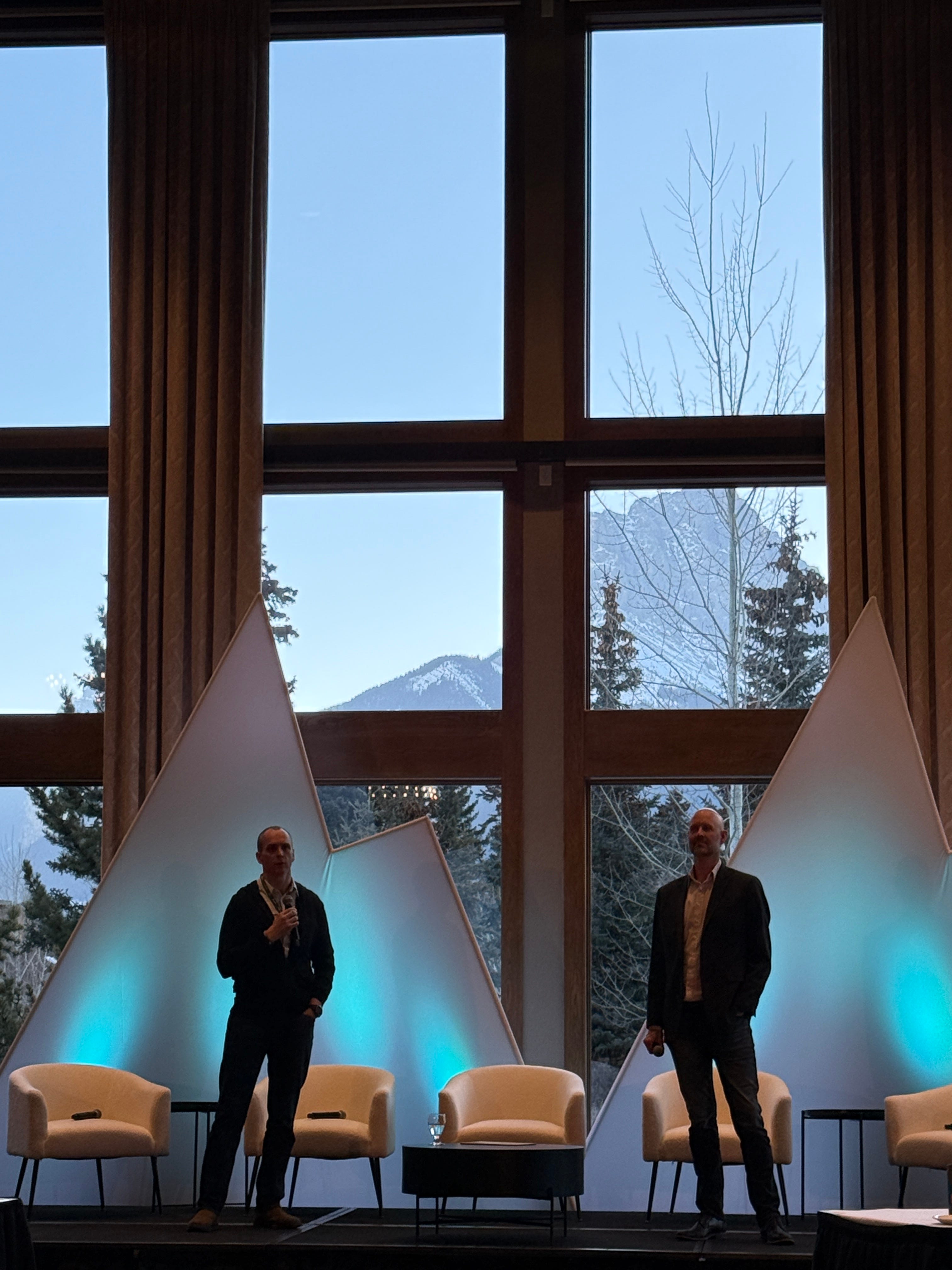
Led by Caity Milton, “the future of collection” was a panel (Chris Robson, David Page, Clint Graumann, Stefan Amberger) that covered the practices and models of satellite collection and distribution. There were discussions about innovative financial approaches, the role of government in earth observation (hard to ignore), and how funding certain infrastructure can provide additional financial and operational benefits to unintended groups. Some thoughts on unlocking the potential of EO and how practitioners could adopt new models when government customers are less agile. Finally, determining the value of archived data is always a hot topic, particularly in light of AI-based applications.
On Thursday, Jon and I were happy to hand over North51 to Priscilla Cole from Geospatial Risk. She provided colour on her organization and introduced Louie Woodall from Climate Proof, who took us through a view on the value of geospatial data. Again, there is a schism between humanitarian value and the need for commercial satellite and aerial operators to keep paying the bills. Louie spent some time digging into the central concepts of climate adaptation, highlighting that climate change is not something that will happen; it is happening now. The insurance industry has been hurt, but won’t accept the same fiscal beating; instead will apply technology to make better bets. The insurance sector doesn’t lose, but we might lose our policies.
Priscilla then welcomed Tee Barr (Geospatial Risk’s Co-Founder) to the stage, and they took us on a discursive journey through the technical elements of measuring risk with geospatial technology. The different elements of the insurance sector, how to think about parametric insurance, the different senses of time, and risk vs catastrophe. This discussion left me feeling that our understanding of risk depends heavily on scale and accuracy. As devices advance, this can unlock more revenue opportunities (or reduce losses) for the risk sector.
After lunch, North51 returned with a panel on “Geospatial beyond the GUI” with Nate Ricklin, Veronique Nell, Ash Hoover, and Ben Tuttle. While geospatial has always been a User interface-centric activity. Increasingly, we are seeing that geospatial processes are happening “under the hood.” This, combined with modern AI technology, is a heady brew. But there is concern with unsupervised machine-created inferences. The concept of human-on-the-loop (HOTL) developed and seemed popular. In contrast to human-in-the-loop (HITL), HOTL seems more agile. Critically, inference speed can be retained while maintaining insight quality.
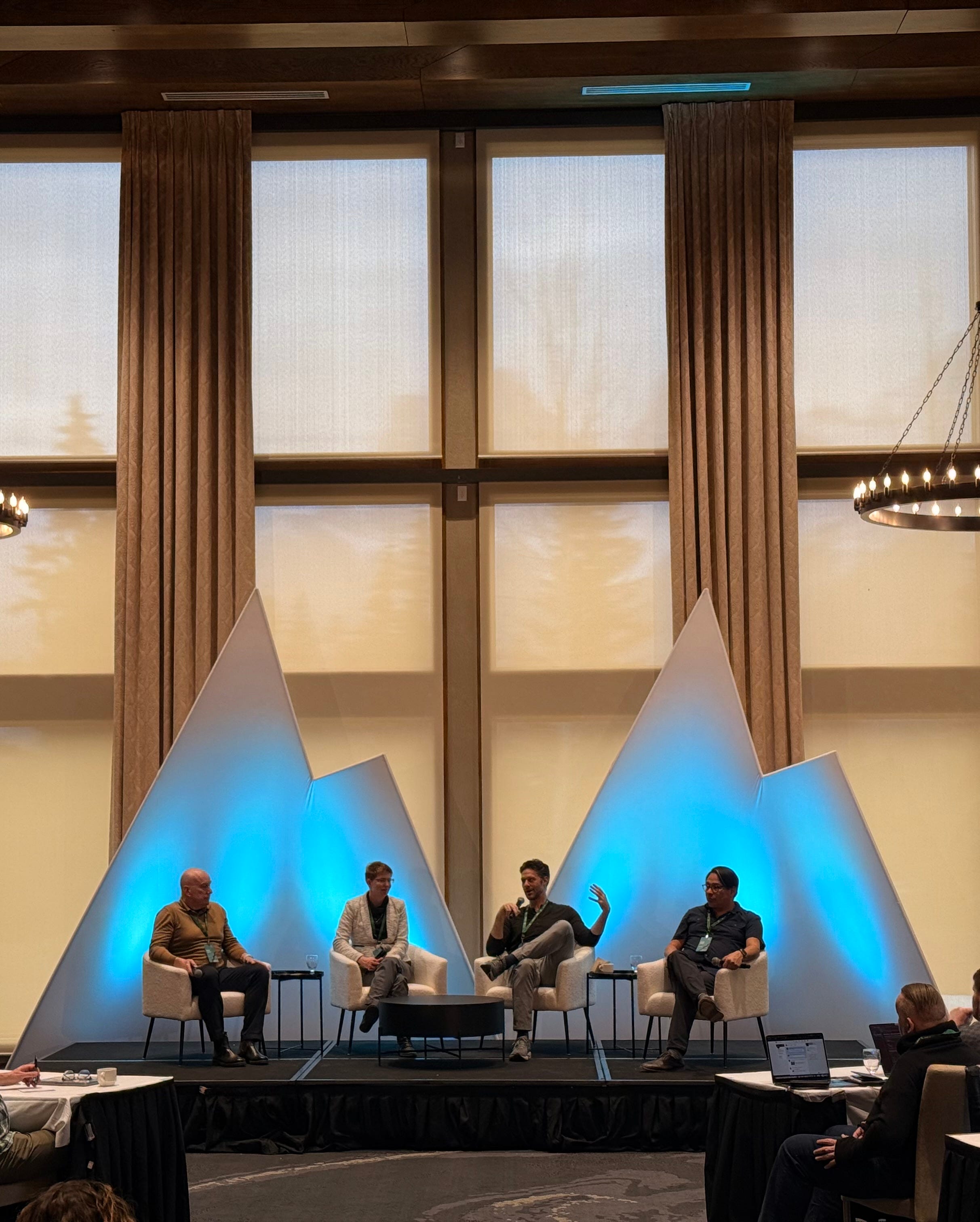
Not to be outdone, Bill Greer, Steve DeRoy, Ash Hoover, and Peter Rabley took us on a tour de force of the ethical topics facing our industry. “Ethics, Influence, and the Role of the Practitioner” embodied the deep paradox of the geospatial community: that there are so many hugely valuable activities which ought to have a value, but only Governments will pay for. But what happens when those activities are not in a government’s interest? This resonated particularly with Bill’s commentaries on Common Space and Steve’s deep experiences with Indigenous mapping. While we were left with much food for thought, there is a sense that more honest discourse and some empathy would go a long way. Also, there is a sense that “pay what you can” is a concept that sounds naive but could be surprisingly useful.
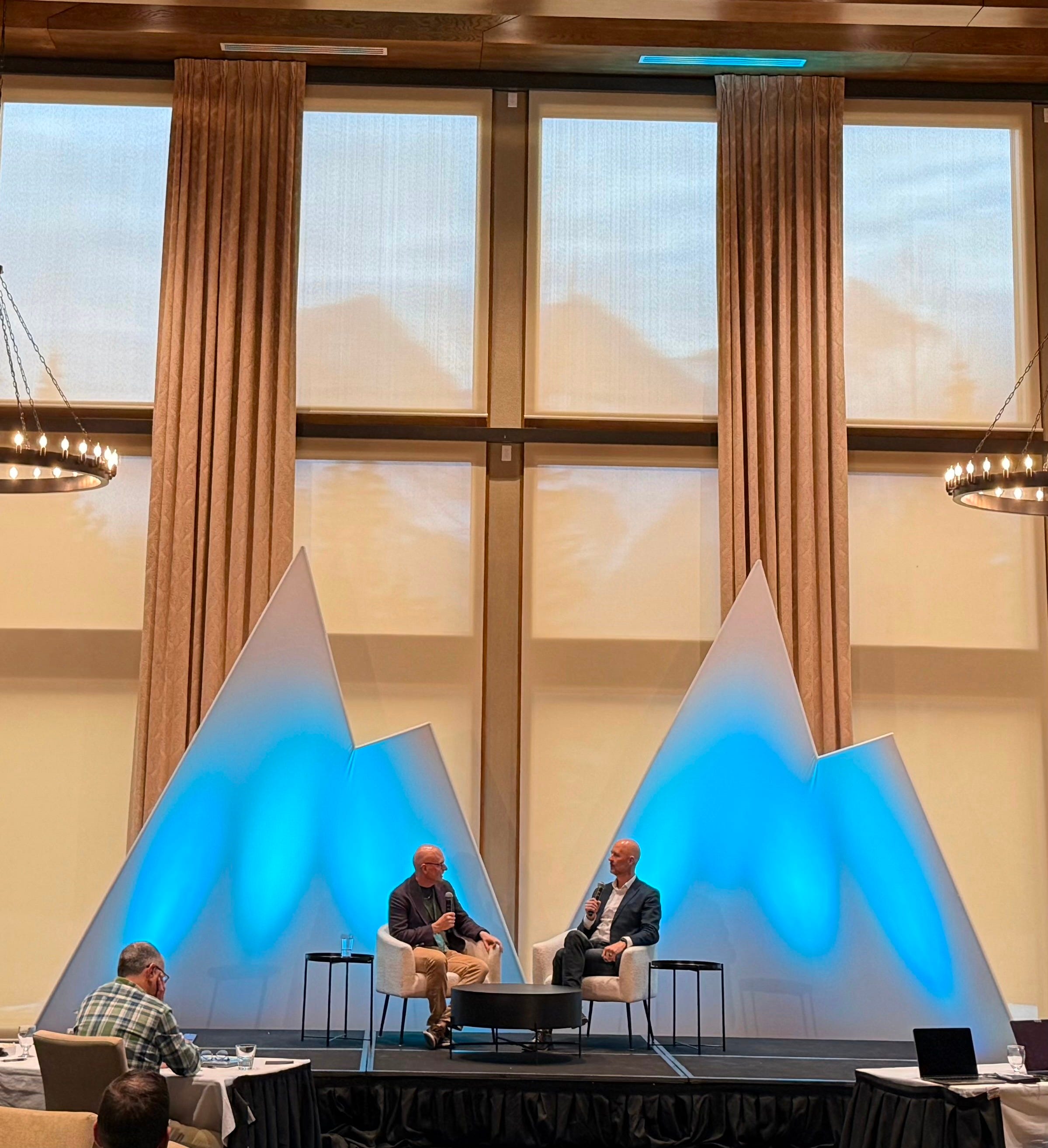
We rounded off our main day with another fireside chat between Jon Neufeld and Don Murray, the Co-Founder and present CEO of Safe Software. Don has been a humble geospatial luminary for the last 30 years, yet didn’t appreciate being described as a legend. The consistent success of Safe Software and its primary FME product line is undeniable, filling a repeatability gap with practical and valuable software. When described that way, it all sounds easy, and listening to Don would trick you into thinking that everything was straightforward. That’s the thing about people like Don, their humble, understated stories would make you think anyone could succeed. But the arc of success from satisfying a contract for the British Columbia Government to building a profitable company with $250m of annual revenue is not a normal thing.
With that, it was over.
Except it’s not, not really. Ideas tend to stick and grow. This year, the themes for me were:
Arcs of success, seeing examples of small incremental, practical successes building into amazing
Applications of technology, fear of technology (especially AI) is unhelpful, but people do need to be led with integrity and honesty
Risk is apolitical, and increased accuracy is usually a revenue model: this is the only time that bad news sells (apart from the actual news)
The business models of EO are still unsettled, but there is agreement that the “per square kilometre” model is unsatisfactory.
These ideas will now influence my thinking and how I see my community. And I guess, that’s the point.
Hopefully, I’ll see you at N51 next year, and if you like backcountry skiing, talk to me about the Executive Dirtbag Offsite.